1. What is SAP Data Migration?
In an SAP landscape, data migration is the process of transferring data from legacy or non-SAP systems into a new SAP platform such as SAP S/4HANA while ensuring that the data remains accurate, consistent, and usable.
This is not simply moving records from one place to another. It involves ensuring data is properly structured and aligned with the target system’s requirements, so that business processes continue to function effectively from the moment the new system goes live.
Quick Definition: SAP Data Migration
SAP data migration is the movement of business data from legacy or non-SAP systems to a new SAP platform such as SAP S/4HANA without compromising its quality, accuracy, or integrity.
This process is a critical part of system upgrades, cloud transitions, and landscape consolidation programmes. A well-executed migration ensures the new system is populated with reliable, high-quality data from day one giving every team the confidence to operate without disruption.
2. Why Data Migration is critical in SAP Transformations
Data migration is not just a technical activity it directly impacts business performance. When executed properly, it helps organisations:
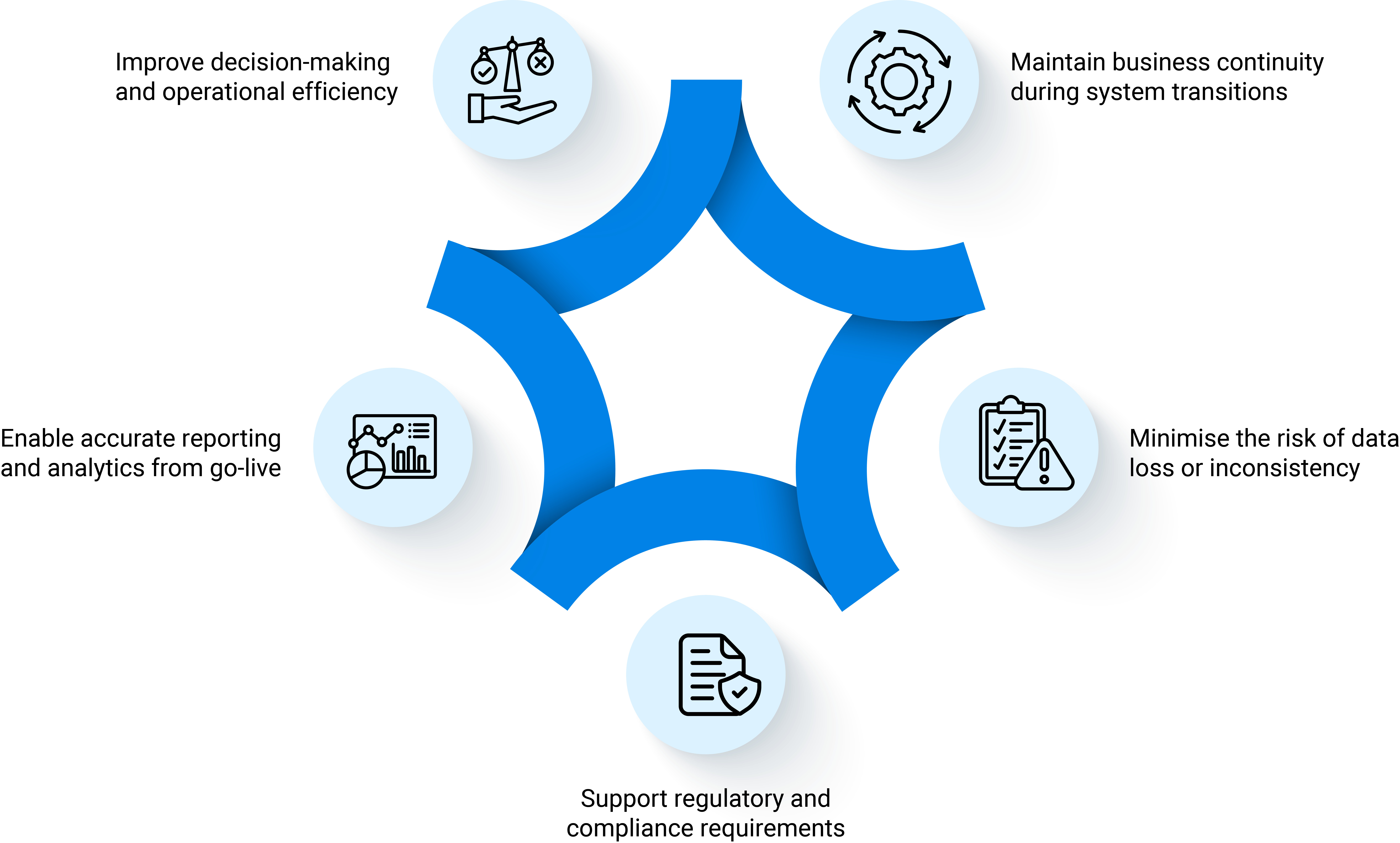
• Maintain business continuity during system transitions
• Minimise the risk of data loss or inconsistency
• Support regulatory and compliance requirements
• Enable accurate reporting and analytics from go-live
• Improve decision-making and operational efficiency
On the other hand, poor data migration leads to inaccurate reports, broken processes, and most damaging of all a loss of trust in the new system. That trust, once lost, is costly to rebuild.
Why does data migration matter in SAP projects?
Because it ensures business continuity, data integrity, compliance, and reporting accuracy from the moment the system goes live. It is the difference between a transformation that delivers value and one that creates disruption.
This is why leading SAP programmes treat data migration as a foundational workstream not a backend activity. It deserves the same governance and attention as any other critical element of the transformation.
3. Data Migration vs. Data Conversion vs. Data Integration
These three terms are frequently used interchangeably on SAP programmes and that confusion leads to misaligned scope, unclear accountability, and planning gaps. They are related, but they are not the same thing.
Aspect Data Migration Data Conversion Data Integration
Purpose Move data between systems Transform data to new format Unify data across sources
When Used System upgrades / go-live Alongside migration Ongoing / real-time
Data Movement Yes – one-time transfer Yes – with transformation No – data stays in source
SAP Example Legacy ERP → S/4HANA Customer → Business Partner CRM + Finance → Dashboard
End Goal Populated target system Compatible data structure Consolidated cross-system view
3.1 Data Migration
Data migration is focused on moving data from one system to another typically as a one-time activity during a system transition. The core concern is that the transfer is complete and accurate.
Example: An organisation moves customer master data from a legacy ERP system to SAP S/4HANA as part of a system upgrade. The legacy ERP is the source. S/4HANA is the target. The records are transferred this is data migration.
3.2 Data Conversion
Data conversion is about transforming data, so it fits the structure or requirements of the target system. It often happens alongside migration but is a distinct activity requiring field mapping, business rules, and structural changes.
Example: Legacy systems store customers and vendors as separate records. SAP S/4HANA uses a unified Business Partner model. Migrating those records requires restructuring mapping fields, applying logic, and consolidating entries. That transformation is data conversion.
3.3 Data Integration
Data integration is about combining data from multiple systems into a unified view often for ongoing, real-time access. Unlike migration, it is not a one-time event. It is a continuous capability that lives beyond the go-live.
Example: An organisation brings together data from its CRM, finance system, and supply chain platform into a central reporting dashboard. The data stays in each source system but is accessible together in real time that unified view is data integration.
4. Why these distinctions matter
While closely related, each concept serves a different role in an SAP environment:
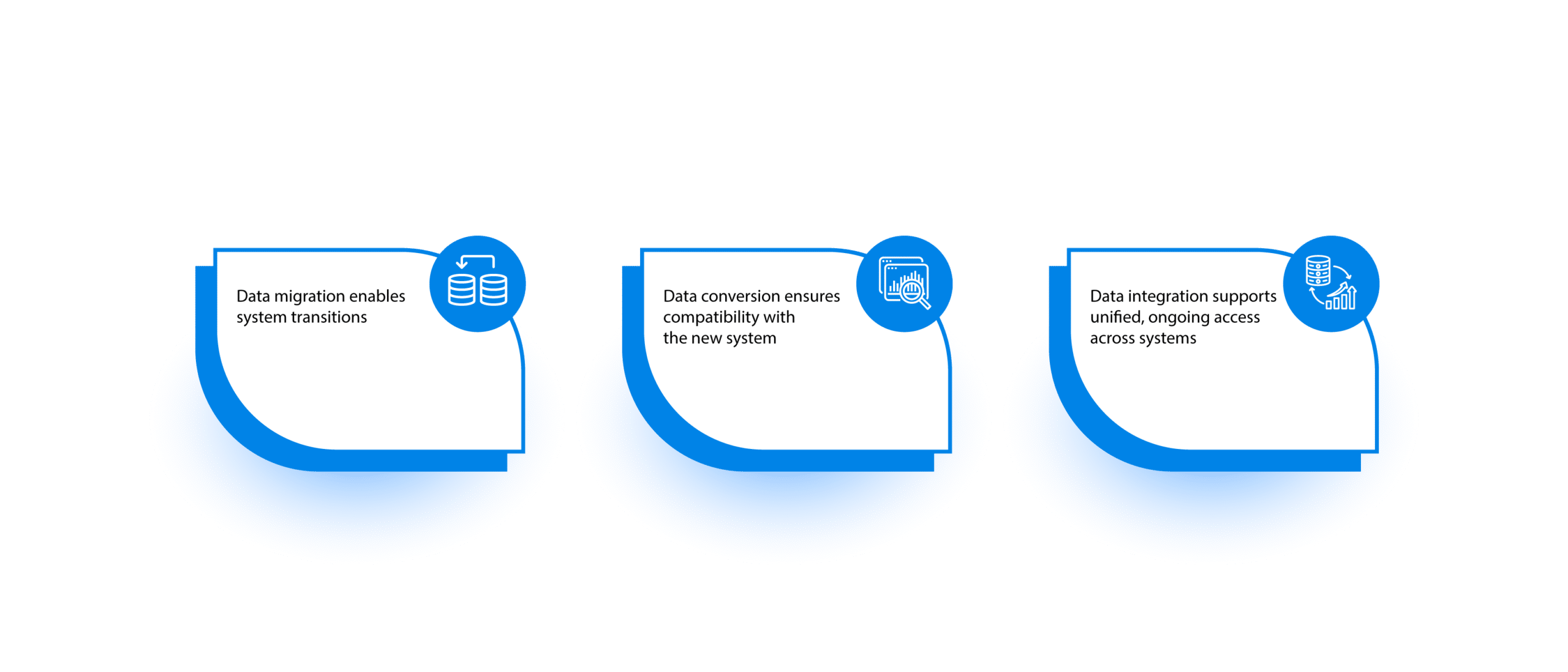
• Data migration enables system transitions
• Data conversion ensures compatibility with the new system
• Data integration supports unified, ongoing access across systems
In most SAP transformation programmes, all three play a role at different stages. Clearly understanding their purpose helps organisations define the right strategy, assign the right resources, and avoid the confusion that derails execution.
5. Building a strong foundation
A successful SAP transformation starts with a clear understanding of data. By establishing what migration involves and how it differs from related concepts organisations can plan activities more effectively, align business and IT teams early, and reduce risk throughout execution.
This foundational clarity is the starting point for everything that follows: methodology, tooling, governance, and cutover. And it is where Acuiti Labs begins every data migration engagement because getting the basics right is what makes the rest possible.