
In today’s consulting landscape, high-pressure client engagements in consulting are both a hallmark of opportunity and a source of organizational strain. Whether in technology transformation, digital enablement, or large-scale system integration, consulting teams often operate in fast-changing, high-demand environments where the boundaries between urgency and burnout blur easily.
The challenge isn’t new – but it’s become more pronounced as industries undergo rapid transformation and clients themselves face mounting market pressures. The result: consulting teams caught between aggressive timelines, unclear expectations, and the pursuit of long-term business growth.
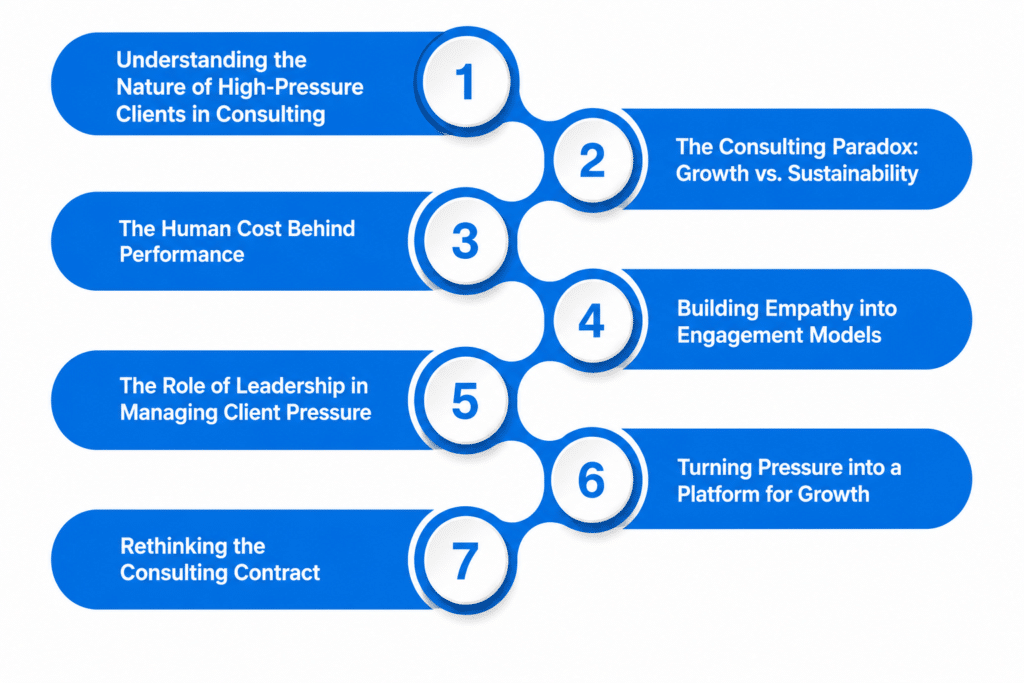
1. Understanding the Nature of High-Pressure Clients in Consulting
High-intensity clients often emerge during phases of major change – mergers, demergers, system transformations, or new business launches. In these situations, consulting partners are not just solution providers; they are co-architects of transformation.
However, such environments can lack structure, established governance, and clarity. This leads to reactive operations, last-minute escalations, and shifting priorities – all of which translate into high stress for delivery teams.
2. The Consulting Paradox: Growth vs. Sustainability
For consulting firms, especially niche or growing ones, demanding clients often represent significant business opportunities. The pressure to deliver “at any cost” can overshadow considerations of employee well-being.
While short-term responsiveness wins client praise, over time, it can set unhealthy precedents – rewarding overextension rather than smart execution and eroding sustainable delivery models.
3. The Human Cost Behind Performance
Consulting thrives on high-caliber talent – individuals driven by learning, challenge, and client impact. But when late nights, weekend work, and constant firefighting become normalized, engagement and creativity decline.
Consultants begin to equate visibility with overwork, and clients start to expect unsustainable flexibility. The cost is not only human; it’s organizational – turnover, loss of expertise, and diminished trust in leadership.
4. Building Empathy into Engagement Models
Empathy in consulting doesn’t mean complacency – it means understanding the human dynamics of high performance.
A few foundational principles help strike the right balance:
- Structure over speed: Set clear governance and delivery boundaries early in engagement.
- Data-driven planning: Use metrics to predict workload patterns and manage burnout risk.
- Empathetic escalation: Address pressure points collaboratively, not reactively.
- Recognize the “how,” not just the “what”: Reward consultants who deliver effectively and sustainably, not merely those who sacrifice personal time.
5. The Role of Leadership in Managing Client Pressure
Leaders play a critical role in navigating this balance. They must act as translators on client urgency and team sustainability. It requires courage to say “no” when timelines become unrealistic, and wisdom to design delivery models that maintain quality without overburdening people.
Leadership empathy – understanding both the client’s business pressure and the team’s human limits – is what differentiates sustainable consulting organizations from those running on attrition.
6.Turning Pressure into a Platform for Growth
Handled well, difficult engagements can accelerate capability building. They expose consultants to complex problem-solving, stakeholder management, and resilience – qualities that define exceptional professionals.
The key is to turn intensity into learning, not exhaustion. When supported by empathetic leadership and structured delivery models, even the toughest engagements can become defining growth experiences for consulting professionals.
7. Rethinking the Consulting Contract
Ultimately, consulting is a people business. Contracts define deliverables, but relationships define success. As the industry matures, the most successful consulting organizations will be those that align business ambition with human sustainability – where performance, empathy, and purpose coexist.
High-pressure client environments are here to stay. What must evolve is how consulting firms navigate demanding client engagements. The path forward lies in redefining success: not by the number of hours worked, but by the resilience, trust, and growth built along the way.
Putting Principles into Practice
As consulting environments become more complex and transformation programs grow in scale, firms must balance delivery excellence with sustainable team practices. Acuiti Labs, one of the leading consulting firms, enables enterprises to transform their Quote-to-Cash processes and unlock new revenue models by leveraging deep expertise in SAP Billing and Revenue Management (SAP BRIM) and SAP Public Cloud solutions.
With a 100% project success rate and Acuiti Labs’ own IP-led solutions, the firm helps businesses scale operations, optimize complex billing environments, and remain future-ready in an increasingly subscription-driven economy. By combining deep domain expertise with a structured, people-centric delivery approach, Acuiti Labs ensures that organizations achieve meaningful business outcomes while consulting teams operate in sustainable, high-impact engagement environments.
Looking to navigate complex consulting engagements more effectively? Contact Acuiti Labs to explore how we can support your transformation journey.